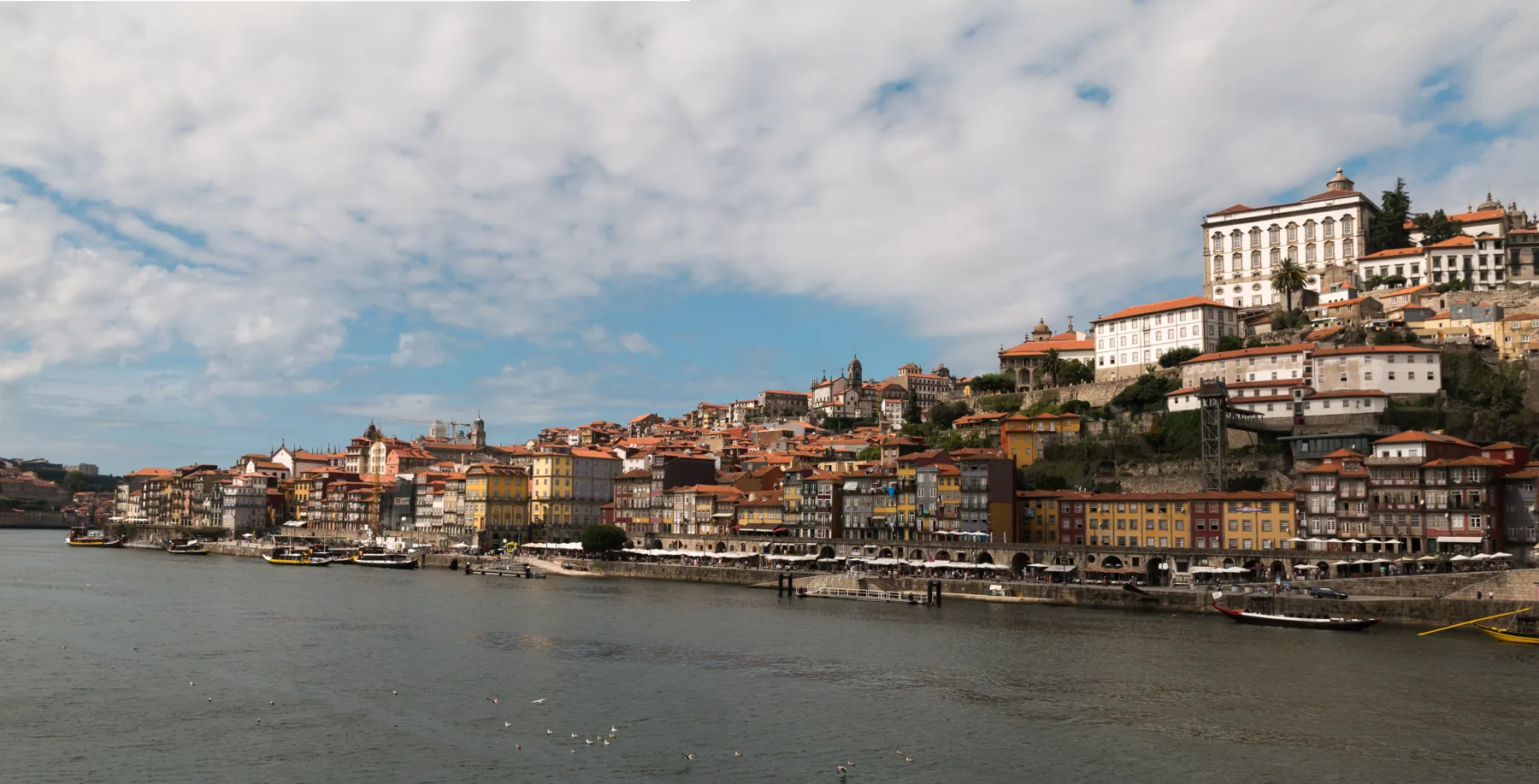
To choose when to visit Porto, distinguish climate averages from weather forecasts. The former describe a historical period; the forecast helps prepare the specific days of the trip. This guide uses the IPMA climatological normal for Porto / Pedras Rubras, from 1991-2020, with data consulted on 3 October 2026.
Average temperatures by month
The table presents the average daily maximum temperature and the average daily minimum air temperature. They are not records, extremes expected for your stay, sea temperature nor today’s forecast. The Pedras Rubras station also does not exactly represent all streets and areas of the city.
| Month |
Average daily maximum (°C) |
Average daily minimum (°C) |
| January |
14,0 |
6,4 |
| February |
15,0 |
6,8 |
| March |
17,0 |
8,8 |
| April |
18,1 |
10,1 |
| May |
20,3 |
12,3 |
| June |
22,7 |
14,5 |
| July |
24,3 |
15,5 |
| August |
24,8 |
15,7 |
| September |
23,5 |
14,8 |
| October |
20,7 |
12,9 |
| November |
16,8 |
9,4 |
| December |
14,7 |
7,6 |
Source: IPMA, Climatological Normal Porto / Pedras Rubras, 1991-2020, 2024 version. Averages help compare seasons; consult the current forecast to decide clothing, route and activities. A monthly average does not allow concluding whether it will rain on your arrival day.
Choosing the season according to your programme
If you prefer walking with more moderate average temperatures, compare spring and autumn with summer in the table. This preference is a comfort choice, with no guarantee of fewer visitors, cheaper accommodation or absence of rain. Your specific dates and bookings should guide the decision.
For a trip focused on museums and indoor visits, you can keep a flexible programme in different seasons. For long outdoor walks, leave more margin to change the sequence. The Porto itineraries show how to swap a coastal block for a city visit.
Preparing for rain without losing the day
If the forecast indicates rain, combine an indoor visit with a nearby area, instead of alternating several times between distant points. Confirm tickets and opening: a museum should not be treated as an available alternative without consulting the day’s conditions.
Take footwear suited to the route and prepare layered clothing. Consider the return to accommodation and group comfort before deciding on a long walk. In the guide to visits by area, choose an indoor option that matches your interests, without booking several reservations for the same afternoon.
Heat, coast and group comfort
When the forecast indicates heat, distribute the most demanding walks during cooler periods and intersperse breaks. Choose shade and rest spots on the route. A summer average maximum does not exclude hotter days; use the forecast to adjust the plan.
For a walk in Foz, also consult wind and relevant warnings. Air temperature alone does not inform about bathing safety. Respect signage and local conditions, without confusing a coastal walk with a beach programme.
Douro and other destinations need their own forecast
Porto / Pedras Rubras averages are not a forecast for Régua or Pinhão. If you book a Douro trip, consult the conditions for that locality and confirm any changes with operators. For Gaia, also adapt the route to rain and travel comfort.
Before departing, consult the forecast for Porto and each trip destination, prepare suitable clothing and confirm an alternative to the outdoor programme. The main guide helps coordinate the trip. This content presents historical climate and planning guidance, without generating its own forecast.
Sources to confirm the trip