
Lagos: practical guide for a day or as a base for a stay in the Algarve
Straightforward guide for travellers to choose between the historic centre, Meia Praia and the cliff beaches in Lagos, with visiting order, access and alternatives.

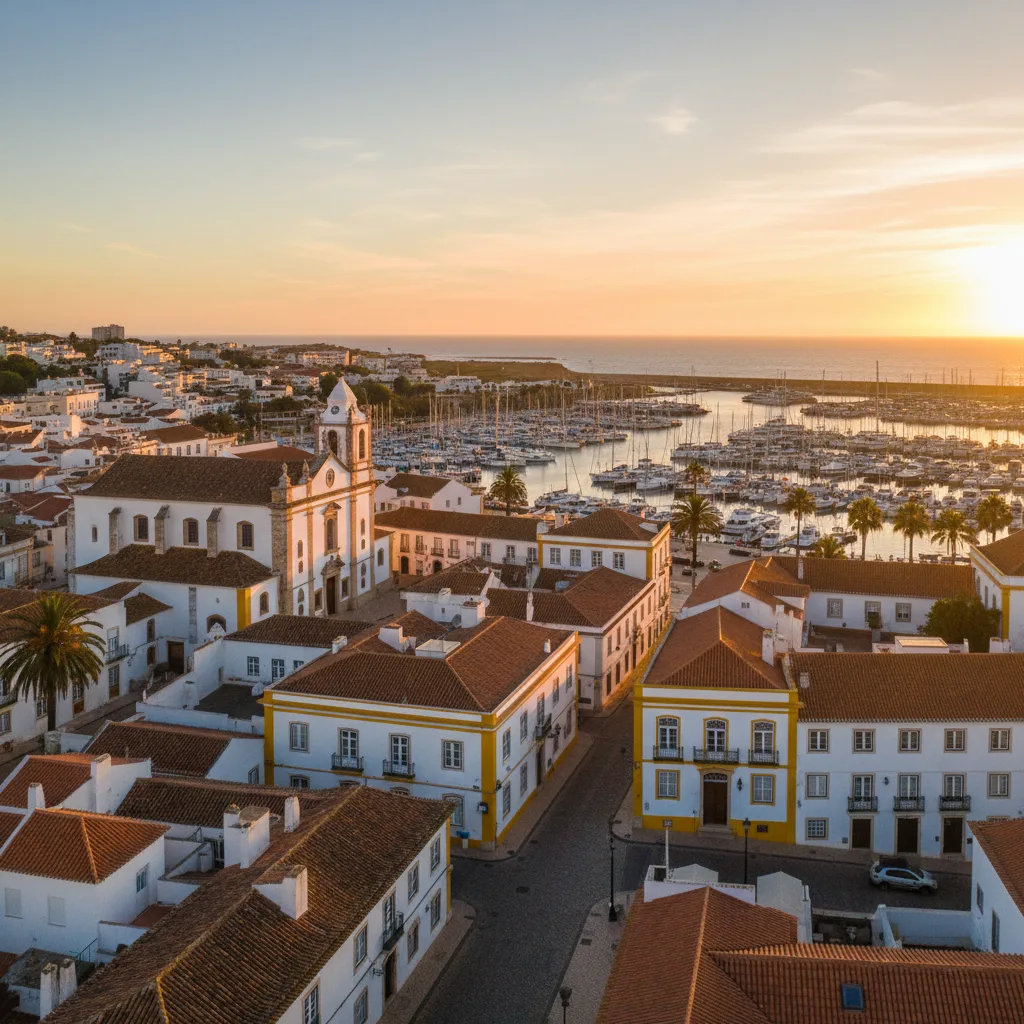
This guide helps you plan a day in Lagos or use it as a base during a longer stay in the Algarve. It compares the historic centre, Meia Praia and the cliff beaches and suggests a possible visiting order. Before heading out, check access and conditions with the local authorities. Official sources are listed at the end of the guide.
| Area | Main feature | Access | Ideal for |
|---|---|---|---|
| Historic centre and seafront promenade | Walls, Governors’ Castle and Ponta da Bandeira Fort by the water | Check the official itinerary and access points | Heritage and a stroll along the seafront promenade |
| Meia Praia | Long beach to the east of the town | Plan the connection from your accommodation | Extensive sand and swimming |
| Cliff beaches | Small beaches between cliffs: Batata, Pinhão, Dona Ana and Camilo | Check access; Camilo has a restriction published by APA | Scenery and photography |
Historic centre and seafront promenade
The historic centre of Lagos brings together the main heritage sites: the walls, the Governors’ Castle and the Ponta da Bandeira Fort, included in the accessible itinerary published by Visit Portugal, together with the seafront promenade. Use the itinerary map to pick the stops and check current access conditions with local bodies.
For those who value historical context, this is the area to start the day. Check the opening times of the buildings you plan to visit and allow time to wander at a leisurely pace.
- Heritage: walls, Governors’ Castle, Ponta da Bandeira Fort
- Walking axis: seafront promenade between the fort and the ribeira
- Official accessible itinerary map: Lagos accessible itinerary
Meia Praia
Meia Praia lies to the east of the town and is an option to weigh against the small beaches around Lagos. Plan the link between your accommodation and the beach access you intend to use.
For a full day, combine the morning in the historic centre with the afternoon at Meia Praia. More details about the beach in Meia Praia.
- Location: to the east of the town
- Advantage: extensive sand
- Note: check beach services and parking on site
Cliff beaches
The small beaches around Lagos include Batata, Pinhão, Dona Ana and Camilo. The tourist description of Camilo mentions around 200 steps, but this historical access does not confirm current conditions. The APA list updated on 4 September 2026 keeps the indication not to swim at Camilo due to instability in the beach access. Check the restrictions before planning your visit.
Travellers with reduced mobility should check current conditions with the local authorities, including the specific route they intend to use. More information about one of the beaches in Dona Ana Beach.
- Beaches: Batata, Pinhão, Dona Ana, Camilo
- Access: check the route and current restrictions for each beach
- Tip: bring water and suitable footwear
Ponta da Piedade as a separate outing
Ponta da Piedade is a coastal rock formation with sea-carved caves and deserves its own outing, separate from the historic centre circuit. Boat trips are an option, subject to the operator’s conditions. For a walk on land, check the authorised route and local warnings. For Sagres, Monchique and the west coast, see our guide to day trips from Faro, Albufeira and Lagos.
Suggested order: historic centre in the morning, Meia Praia or cliffs in the afternoon, and Ponta da Piedade at the end of the day to see the light on the cliffs. More itinerary inspiration in Romantic Weekend in Lagos.
- What to see: rock formation with sea caves
- Options: check authorised land routes or boat trips
- Conditions: check sea state and local operators
Accessibility and bad weather alternatives
Visit Portugal publishes an accessible itinerary of Lagos with a map, which includes the fort, the Governors’ Castle, the historic centre and the seafront promenade. The same guide points to Batata, Luz, Porto de Mós and Meia Praia as accessible beach options, but this does not guarantee that all routes or sand areas are free of steps.
If the forecast is not suitable for a coastal walk, check which cultural spaces are open in the centre and adapt your plans. Check local warnings and the operator’s conditions before any boat trip.
- Official map: Lagos accessible itinerary
- Options mentioned in the accessible guide: Batata, Luz, Porto de Mós and Meia Praia; check current conditions and required access
- Plan B: historic centre, museums and seafront promenade
How to get there from Faro airport
From Faro airport, the airport website indicates Vamus Aerobus services with a connection to Lagos. To go by train, you must first get to Faro station, by bus or taxi, and then travel on to Lagos; check timetables and the final route to your accommodation.
Compare prices, timetables and the final connection to your accommodation at the time of travel.
- Bus: Vamus Aerobus from the airport to Lagos
- Train: via Faro station (bus or taxi to get there)
- Confirmation: timetables and final route with the operator
Official sources: Visit Portugal: Lagos, tourist description of Camilo, APA bathing restrictions and Faro airport transport.